

We have an intimate relationship with the price of gas that can feel hard to escape from. Even when you’re not filling up at the pumps, it looms from illuminated roadside signs. And right now, those daily reminders feel more painful than usual. Since February, the national average has climbed past $4 a gallon, a jump of more than 30% in under two months.
It’s not the first oil crisis we’ve faced, and it’s not the first time expensive gas will inspire people to dust off their bicycles. The 1973 OPEC embargo boosted the idea of cycling as a cheap and efficient mode of transport before it eventually drifted back to being seen by so many as little more than a hobby.
History repeated itself three decades later. When gas prices broke the $4 barrier for the first time in 2008, bike commuting rose by roughly 15% nationwide, and by as much as 23% in cities with established cycling infrastructure. But once again, when prices fell, bicycles were put away.
Nobody knows whether today’s volatile gas prices will see a rerun of the bike boom-then-bust model, but one thing is certain: it is with perfect timing that this year’s Bike to Work Week rolls up on May 11th, with Bike to Work Day on Friday 15th May.
The League of American Bicyclists established National Bike Month in 1956, by coincidence the same year the Federal Aid Highway Act cemented the country's long, asphalt love affair with the automobile. Bike to Work Week runs from May 11 to 17, with Bike to Work Day on Friday the 15th.
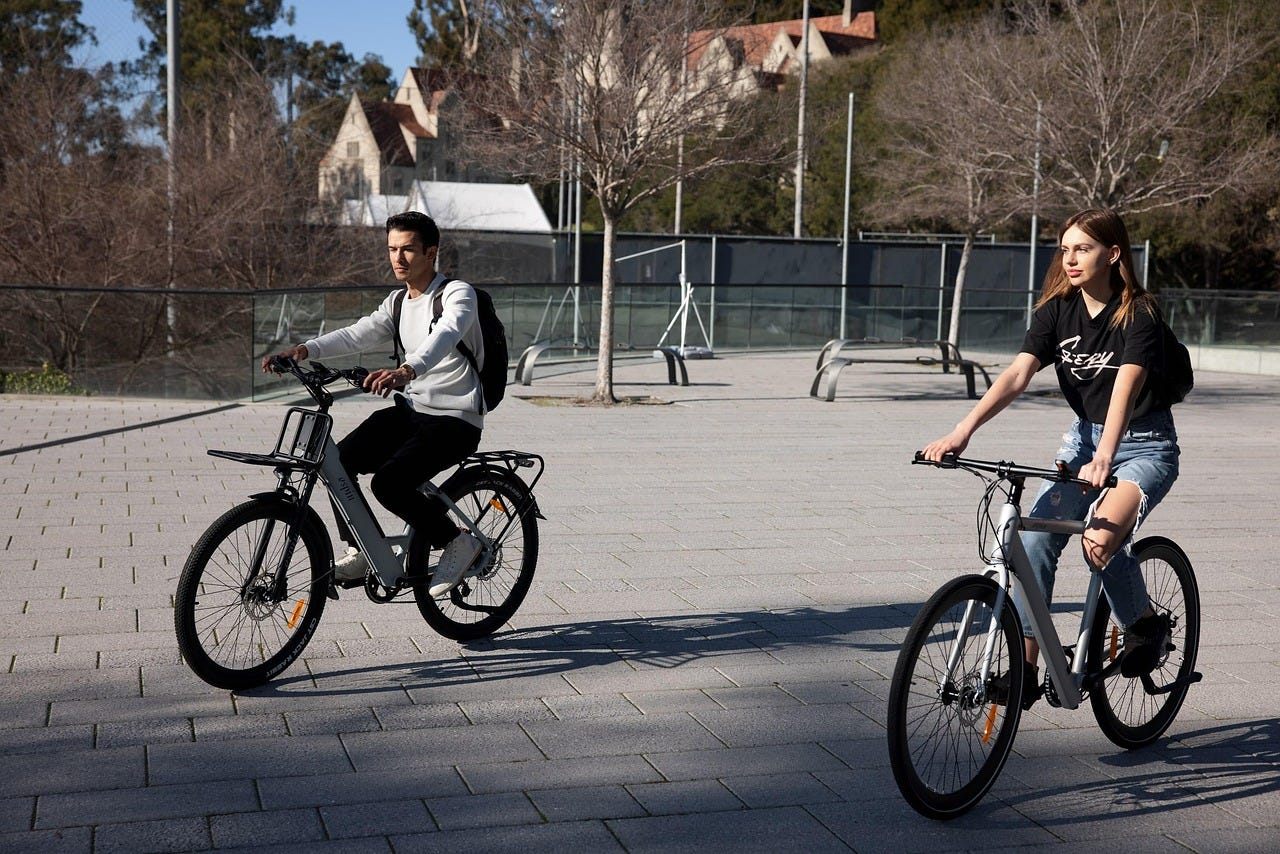
Offering commuters a super-cheap way of getting to work should be an easy sell, but old habits die hard so Bike to Work Day encourages a sociable start to the day: pit stops with coffee and snacks are an excuse to chat, and the camaraderie of many riders navigating the same streets means you are not alone.
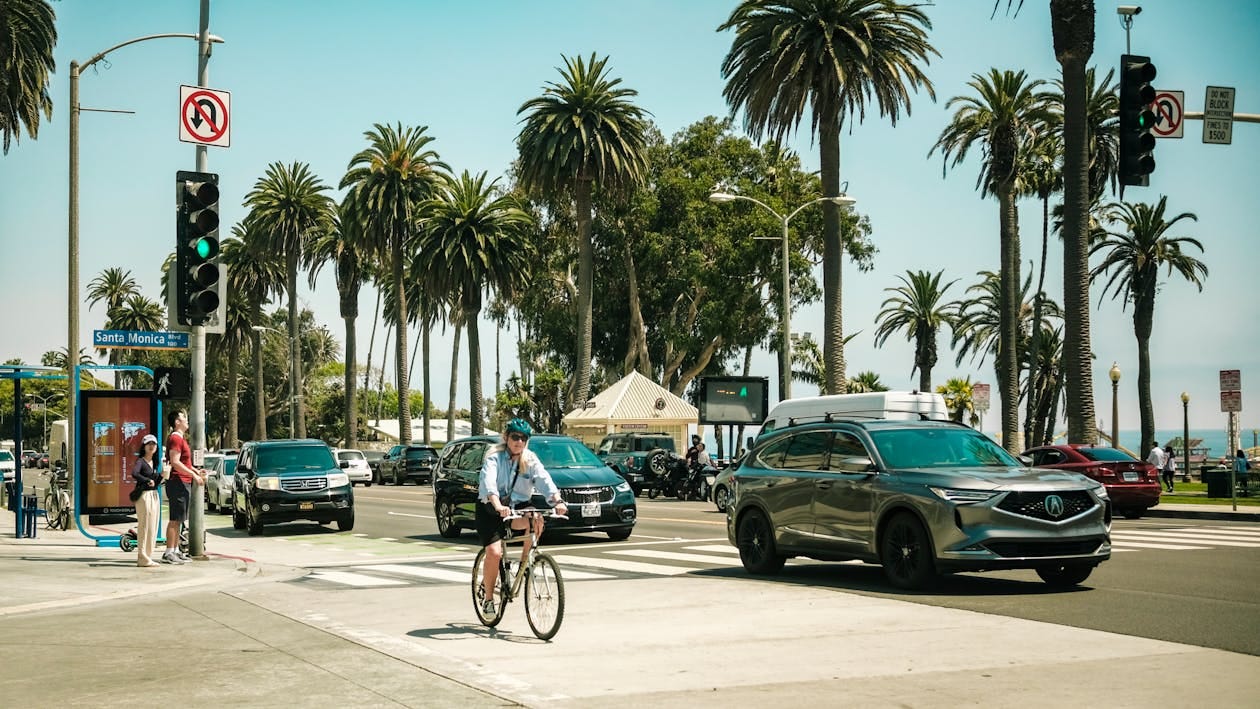
There is strength in numbers. Not only are streets filled with cyclists safer for all, they shine a spotlight on the DOT freeze on all projects whose primary purpose is bicycle infrastructure, and the hundreds of millions of dollars in cycling and walking grants from the previous administration that are now being cancelled. Interestingly, the rejection of pro-cycling policy is far from the populist belief it’s often presented as.
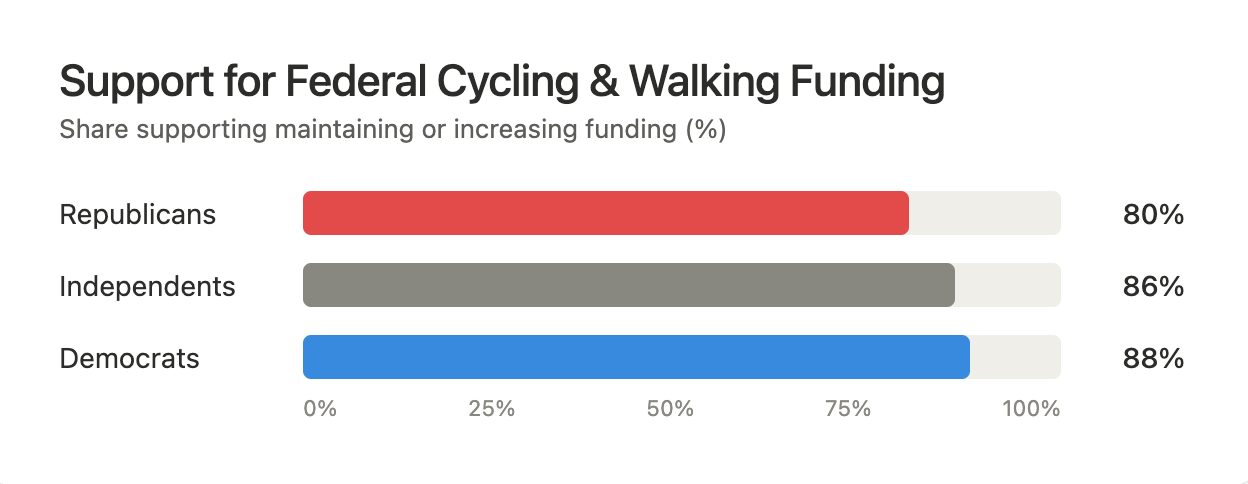
When YouGov tested public opinion in March 2025, they found that three-quarters of people supported bike lanes in their area. Only 9% want fewer. And the enthusiasm appears bipartisan. A League of American Bicyclists poll on federal funding for cycling and walking infrastructure found 80% of Republicans believed Congress should maintain or increase it, alongside 88% of Democrats and 86% of Independents.
This latent demand hints at why America’s historic flirtations with utility cycling petered out. After all, we know that city streets without good quality infrastructure often feel too hostile for experienced cyclists, let alone novices. Feeling safe on the roads can be the difference between a recent convert to cycling continuing to commute on two wheels, and seeking sanctuary behind the wheel.
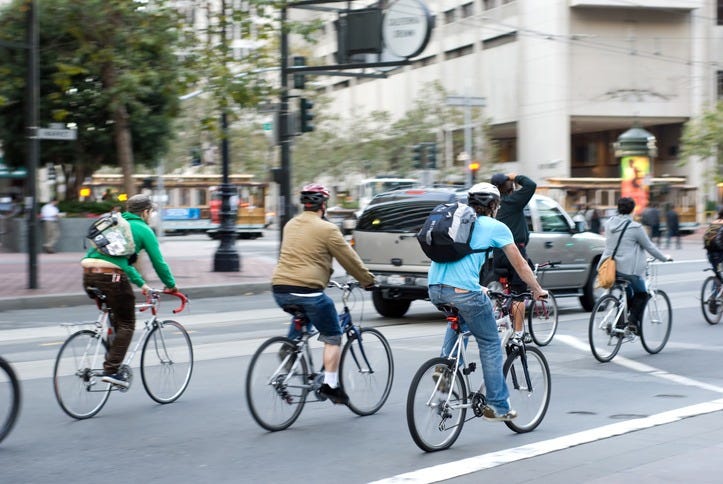
Another hurdle is risk of theft; a crime reported around two million times a year in the US. Aside from the financial blow, a bike theft is often the reason people give up on cycling altogether.
Project 529’s bike registration and recovery services demonstrate what happens when that confidence is restored. Vancouver saw a 40% drop in bike thefts after partnering with Project 529. Denver recorded a 30% reduction in 2024. Of the registered bikes recovered, 97% make it back to their owners.
Piecemeal measures can only go so far. The case for biking to work has never rested entirely on the price of gas, and only a holistic approach to cycling will see it thrive as it has elsewhere.
The countries where cycling took root following previous oil crises are the ones that decided, politically and culturally, to treat the bicycle as a serious mode of transport. America is not there yet, but the polling suggests more of an appetite for change than the federal government acknowledges.
The countries where cycling took root following previous oil crises are the ones that decided, politically and culturally, to treat the bicycle as a serious mode of transport. America is not there yet, but the polling suggests more of an appetite for change than the federal government acknowledges.
Bike to Work week. See you out there.
_
During Bike to Work Week, we're offering 20% off a 529 Protect subscription. Three layers of protection for every registered bike.
Deterrence - visible protection (the 529 shield) that makes thieves think twice before targeting a registered bike.
Recovery - our 529 Detective automatically scans online marketplaces to locate stolen bikes.
Replacement - if a stolen bike can’t be found, we replace the bike up to $3,000.
Use code BIKETOWORK20 during Bike to Work Week only 11th-17th May
529 Protect is available in the United States, except in Washington state.
$3000 wouldn't begin to cover my bike...
“In the old days, a rich man drove a car
and a poor man rode a horse. Now, a
rich man rides a horse and a poor man
drives a car.” – My dad.
Is Commuting by bicycle becoming a
class issue?
How do economics and class determine
who commutes by bike?
I grew up in an area where we had
sidewalks and traffic control. Streets
were safer back then, and most kids had
access to bicycles. We could walk or
ride bikes to school, ballfields, a local
market, a movie theater, and a train
station that had inexpensive
transportation to a major US city about
an hour away.
It was a privilege to have these
transportation options and I recognize
that my family’s economic status (my
father was a school teacher), the color
of my white skin, and level of education
played a large part in this privilege.
As an adult, I have lived most of my life
in, or near a town, or within a city. I’ve
been able to ride a bicycle wherever I
need to go. It’s good exercise, gets me
out into the sunshine and provides a
modicum of sociability.
As a long-term home renter in a town
that has become synonymous with “real
estate portfolios,” I eventually got priced
out of the rental market, and in order to
avoid paying the majority of my income
for rent, I decided to move instead. I
simply can’t afford to live there. In fact,
many of the houses in the
neighborhoods where I lived in the past
have become rental properties owned
by out-of-town and absentee landlords.
I now live in a rural area with no access
to public transportation or meaningful
bicycle infrastructure. Because of safety
concerns, I have to load my bicycle into
a motor vehicle and drive to an area
where there are fewer vehicles or no
traffic at all. I am struck by this irony.
As towns and cities have expanded over
the past several decades, municipalities,
and counties are challenged by
providing safe infrastructure for cyclists
and pedestrians.
Interestingly, as the economy has
moved from major manufacturing to
tech-based industries, many of the
rundown or abandoned industrial areas
of major cities are becoming gentrified
and redeveloped. The real estate values
are rising faster than wages can keep
up. Thus, economics plays a role in who
gets to live in these areas that are
generally closer to city centers and
shopping districts. Many of which are
accessible by bike or public transit.
Further still, as mid-to-lower-priced
homes get pushed farther from town,
and cities bring economic development
to their centers, marginalization
happens.
My work place is only eleven miles from
where I live. Not a bad commute by
bike. However, I would have to travel a
two lane, high-speed state highway with
narrow shoulders to get there and back.
There is little speed control. In the time
that I have lived here – approximately
one year – I have seen exactly one state
trooper monitoring traffic.
In the US, vehicle weight and size have
continued to increase, NOT decrease as
one might expect as we have long since
passed the era of Peak Oil. The
consequences of collisions are far more
dire for pedestrians, cyclists and wildlife.
Actuarial scales used by insurance
companies to predict the likelihood of
future events such as motor-vehicle
collisions is not in my favor. I might be
fine 99% of the time. It’s that one
percent that I find frightening because
the consequences of a cyclist/vehicle
collision are dire.
My sense of self-preservation prohibits
me from spending much time cycling
this road to get to work.
My current living situation is much more
aligned with my budget. I can afford a
few luxuries. But the drawback is that
commuting by bike safely is nearly
impossible.
Seen from this perspective I find it
interesting that the people like myself
who could most benefit from the
financial savings and health advantages
of commuting by bicycle safely have
less opportunity to do so.
So, has bike commuting become a class issue?